
If I had to capture France in three words, I’d say: Eiffel, romance, and wine. Why wine? Because France has long stood among the world’s greatest wine producers a place where a glass of Bordeaux or Burgundy pairs effortlessly with village vistas, haute cuisine, and a culture that elevates terroir to an art.
French wine is synonymous with balance, tradition, and diversity. From the limestone slopes of Burgundy to the gravelly banks of Bordeaux and the chalky soils of Champagne, each region expresses its own identity. Strict appellation rules, centuries of know-how, and relentless focus on vineyard health make French bottles benchmarks for quality.
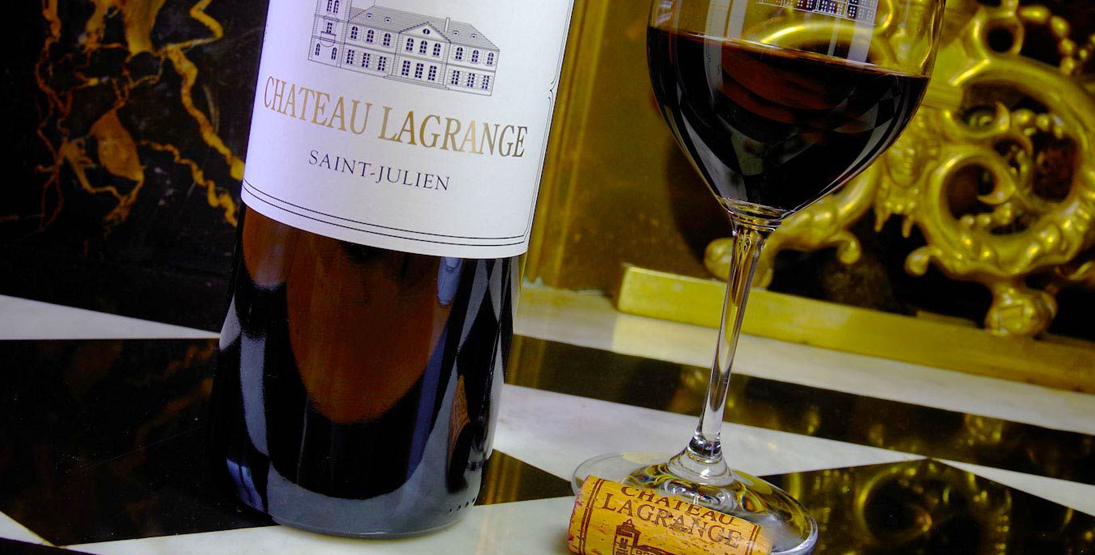
Among renowned names, Château Lagrange in Saint-Julien, Bordeaux, often commands attention. Both the estate and its red wine share the same name, and the property is classified as a Third Growth in the historic 1855 Classification. While prices vary by vintage and bottling, the wine’s reputation for elegance and longevity is consistent.
Middle Ages: The site was known as “Gangrien,” a historical nod to its early viticultural roots.
18th century: Baron de Brane—also linked to the Mouton estate—helped elevate its stature, alongside influential merchant Jean-Valère Cabarrus.
1842–1874: Prince Charles Tanneguy Duchâtel invested in progressive vineyard drainage, a key innovation that improved vine health and grape quality.
Modern era: In 1983, the Suntory Group acquired Château Lagrange under President Keizo Saji, initiating a major renovation led by Marcel Ducasse and Kenji Suzuta. In 2008, management transitioned to Matthieu Bordes and Keiichi Shiina, ushering in a new phase of precision and quality.
The estate spans about 118 hectares, with roughly 102 hectares under vine—parcelled into numerous plots to match grape variety and soil. The plantings are predominantly Cabernet Sauvignon (around 67%), complemented by Merlot (about 27%) and Petit Verdot (near 6%). The average vine age exceeds 35 years, contributing concentration and complexity to the wines.
Harvest and Sorting: Optical sorting technology helps select optimally ripe berries.
Fermentation: Grapes ferment in a range of temperature-controlled stainless-steel vats sized from approximately 66 to 220 hectoliters, allowing tailored micro-vinifications by parcel.
Co-inoculation: The team often employs co-inoculation to guide a clean malolactic conversion and preserve fruit purity.
Maturation: The wine ages in French oak barrels—typically up to 21 months—before bottling and global release.
Saint-Julien Signature: Expect structure, cassis-driven aromatics, and a refined, cedar-tinged frame.
Consistency: Investment in viticulture and cellar technology has tightened quality across vintages.
Age-worthiness: The best bottles evolve gracefully, developing layers of spice, tobacco, and graphite over time.
France’s wine legacy is vast, but estates like Château Lagrange illustrate why the country remains a gold standard. When I picture France—Eiffel, romance, and wine—Lagrange fits that third word perfectly, a glass that carries history, innovation, and place in every sip.
to enjoy 20% VIP Discount online and at all stores plus 50,000 points that you can use for your initial purchase
at checkout
12-14 December 2025